


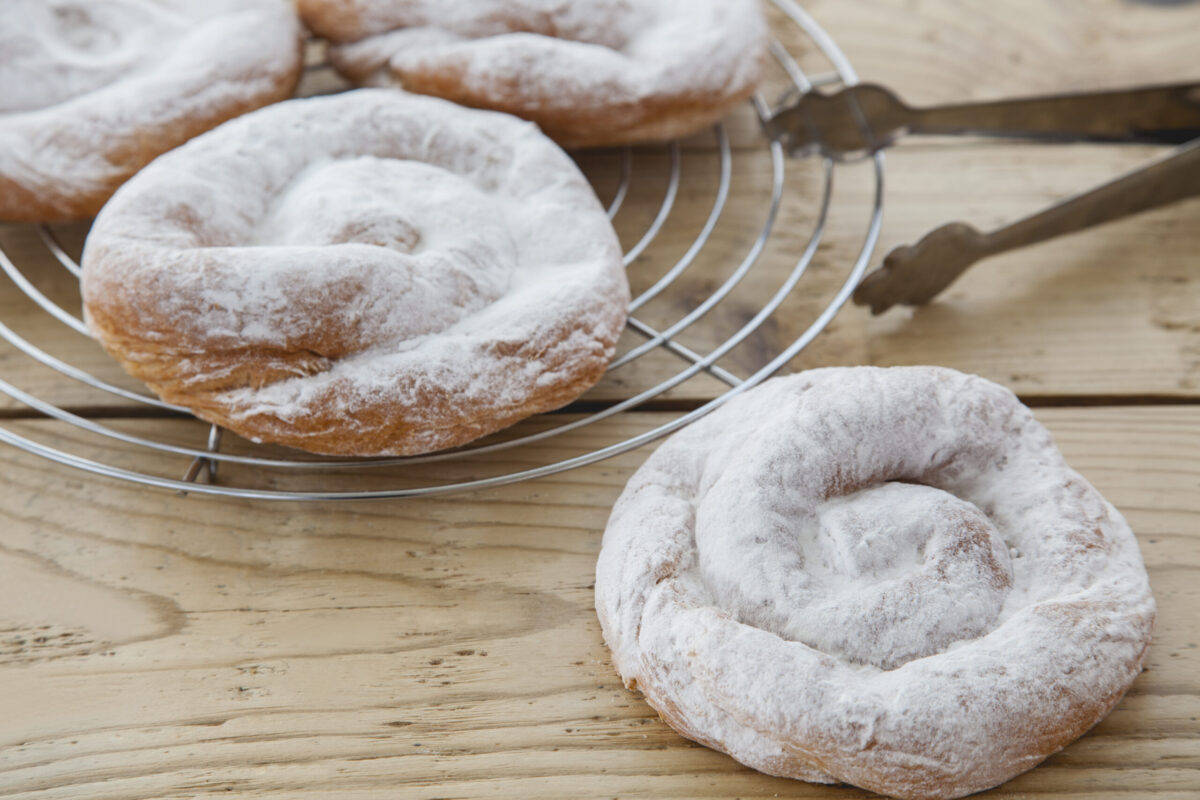
With its spiral shape, delicate texture, and unmistakable flavor that transports us to the island of Mallorca with every bite, the ensaimada is much more than a typical pastry: it is a cultural heritage, a symbol of identity for an entire island, and a creation with centuries of history.
Where does the ensaimada come from?
The origin of the ensaimada is uncertain. Due to its slow fermentation technique and rolled shape, it’s believed to have roots dating back to the Arab era on the island. However, some speculate that Sephardic Jews, who baked a similar bread called challah, may have influenced the creation of the ensaimada.
In fact, some suggest that lard was added to the recipe to “de-Judaize” the pastry after the expulsion of Jews from the island during the reign of the Catholic Monarchs. The first written references date back to 1600 and appear in household inventories in Mallorca, indicating that the ensaimada was already part of daily life on the island.
Why is it called "ensaimada"?
The word ensaimada comes from saïm, which means pork lard in Mallorcan. And indeed, one of the key ingredients of the traditional recipe is precisely that: saïm, generously spread over the dough before rolling it up.
This ingredient not only gives the pastry its name, but also served as a cultural marker during the Inquisition, when the use of pork lard in food was seen as a public declaration that one did not follow Jewish or Muslim customs.
The characteristic spiral shape
The spiral shape of the ensaimada is not just an aesthetic choice: it has a practical function and strong symbolic meaning. When the dough is rolled into a spiral, it retains moisture better and bakes more evenly. Additionally, the open circular shape has been interpreted as a symbol of eternity, continuity, or even the Mediterranean sun.
There is a version of the pastry known as Ensaimada de Mallorca with Protected Geographical Indication (PGI), which guarantees that it is made following the traditional method.
Types of ensaimada
Ensaimadas come in a variety of forms, both filled and unfilled. The unfilled ones, known as lisas (plain), are the most basic and popular. Filled ensaimadas can include:
Pumpkin strand (cabello de ángel) ensaimada
Pastry cream ensaimada
Chocolate-filled ensaimada (dark, milk, or white)
Mallorcan sobrasada (cured sausage) ensaimada
Did you know...?
In the Philippines, there’s a local variant called ensaymada, adapted from the Mallorcan product using local ingredients and widely present in their traditional pastries.
Some historical recipes take up to 12 hours to prepare, including kneading, resting, shaping, and baking.
The largest ensaimadas can exceed one meter in diameter and weigh several kilos!
Pastisart Ensaimadas. Sweet Tradition
At Pastisart, we honor the traditional recipe with long fermentation times, artisan-style doughs prepared using traditional methods, and a soft, fluffy texture, topped with powdered sugar.
They are available in different formats and preparations tailored to the needs of supermarkets, distributors, and Horeca channel businesses, so consumers can enjoy an authentic, delicious product ready to eat any time of day.
Discover the different varieties of Pastisart ensaimadas.
 Your request has been sent.